Beginn des Seitenbereichs:
Seitenbereiche:

  • Zum Inhalt (Zugriffstaste 1)
  • Zur Positionsanzeige (Zugriffstaste 2)
  • Zur Hauptnavigation (Zugriffstaste 3)
  • Zur Unternavigation (Zugriffstaste 4)
  • Zu den Zusatzinformationen (Zugriffstaste 5)
  • Zu den Seiteneinstellungen (Benutzer/Sprache) (Zugriffstaste 8)
  • Zur Suche (Zugriffstaste 9)

Ende dieses Seitenbereichs. Zur Übersicht der Seitenbereiche

Beginn des Seitenbereichs:
Seiteneinstellungen:

Deutsch de
English en
Suche
Anmelden

Ende dieses Seitenbereichs. Zur Übersicht der Seitenbereiche

Beginn des Seitenbereichs:
Suche:

Suche nach Details rund um die Uni Graz
Schließen

Ende dieses Seitenbereichs. Zur Übersicht der Seitenbereiche


Suchen

Beginn des Seitenbereichs:
Hauptnavigation:

Seitennavigation:

  • Universität

    Universität
    • Die Uni Graz im Portrait
    • Organisation
    • Strategie und Qualität
    • Fakultäten
    • Universitätsbibliothek
    • Jobs
    • Campus
    Lösungen für die Welt von morgen entwickeln – das ist unsere Mission. Unsere Studierenden und unsere Forscher:innen stellen sich den großen Herausforderungen der Gesellschaft und tragen das Wissen hinaus.
  • Forschungsprofil

    Forschungsprofil
    • Unsere Expertise
    • Forschungsfragen
    • Forschungsportal
    • Forschung fördern
    • Forschungstransfer
    • Ethik in der Forschung
    Wissenschaftliche Exzellenz und Mut, neue Wege zu gehen. Forschung an der Universität Graz schafft die Grundlagen dafür, die Zukunft lebenswert zu gestalten.
  • Studium

    Studium
    • Studieninteressierte
    • Infos für Studierende
    • Welcome Weeks für Erstsemestrige
  • Community

    Community
    • International
    • Am Standort
    • Forschung und Wirtschaft
    • Absolvent:innen
    Die Universität Graz ist Drehscheibe für internationale Forschung, Vernetzung von Wissenschaft und Wirtschaft sowie für Austausch und Kooperation in den Bereichen Studium und Lehre.
  • Spotlight
Jetzt aktuell
  • Aufnahmeverfahren 2026 – alle Infos
  • Crowdfunding entdecken
  • Jetzt die "Youni"-App holen
  • Klimaneutrale Uni Graz
  • Forscher:innen gefragt
  • Arbeitgeberin Uni Graz
Menüband schließen

Ende dieses Seitenbereichs. Zur Übersicht der Seitenbereiche

Beginn des Seitenbereichs:
Sie befinden sich hier:

Universität Graz Rechtswissenschaften Neuigkeiten Positive Obligations, Effective Execution?
  • Über die Fakultät
  • Unsere Forschung
  • Studienservice
  • Stay Connected

Ende dieses Seitenbereichs. Zur Übersicht der Seitenbereiche

Donnerstag, 16.05.2024

Positive Obligations, Effective Execution?

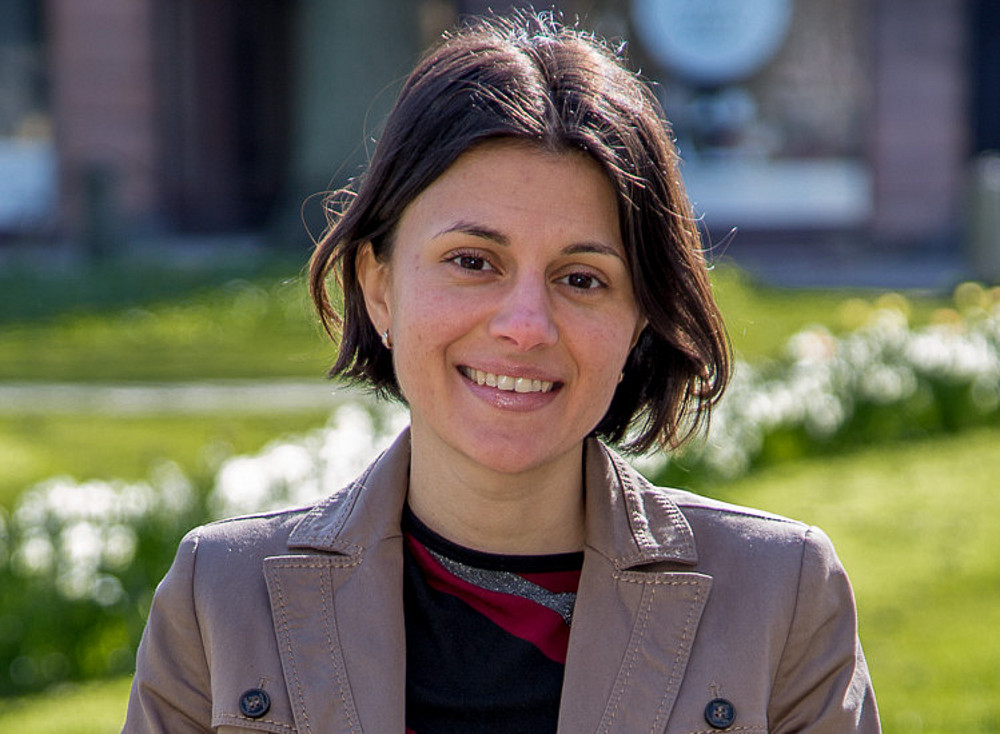
Vladislava Stoyanova ©Juridiska fakulteten vid Lunds universitet

(c) Juristische Fakultät der Universität Lund

Vladislava Stoyanova, University of Lund (Sweden), joins us as Land Steiermark Fellow in Law and Innovation. She is an expert on human rights and especially on the European Convention on Human Rights and Fundamental Freedoms. Presently, she is conducting research on the execution of judgements relating to violations of positive obligations under the Convention. We spoke to her about differences in academic culture, her work in Graz and about the condition of the Council of Europe.

Dr. Stoyanova, you are joining us as Land Steiermark Fellow in Law and Innovation this May and June. Welcome! Compared to your home university in Lund (Sweden), have you noticed any significant differences in campus life yet?

My faculty is much smaller. We do not have this big impressive building that you have. Other than that, I could immediately notice the different way of communicating with the students. Swedish academia is characterized by the perception of informality and equality. My students will never call me Professor Stoyanova; they call me Vladislava. When they write me an e mail, they start by simply saying "Hej Vladislava". I tend to like this more that constant referrals to titles.

At the moment, you are focusing your research on positive obligations under the European Convention on Human Rights, more precisely on the breaches of such obligations and the execution of judgements in this respect. What are the specific challenges in such cases?

Yes, my focus continues to be on positive obligations under the European Convention on Human Rights. During my first week of research stay at Graz, I could complete this piece: KlimaSeniorinnen and the Question(s) of Causation (on Verfassungsblog.de). Right now, I am working on another blog post for Völkerrechtsblog.org. My main objective is to complete one article on execution of judgments where a breach of positive obligations has been found. The main challenge here is that States have discretion how to execute the judgments (i.e., what exact measures to take). The Court does not order concrete measures; although the Court’s reasoning might contain some indications of what States could do, for example regarding changes of their legislation. I would like to understand how States use this discretion.

The Council of Europe and with it the European Court of Human Rights have faced tough times, especially due to the exclusion of the Russian Federation. Have the Convention and its implementation suffered from these developments?

I do not think that the exclusion of Russia has affected the standards under the ECHR, the interpretation of these standards by the Court and the way the Court views its role. The problem has rather been that the Court continues to decide cases against Russia filed before the exclusion and Russia does not cooperate, which places the Court in a difficult position. The reason is that the Court still has to ensure that the views of both parties are taken into account, which is difficult if one of the parties (i.e., Russia) does not participate. Another challenge is that if the Court finds a violation of the ECHR, it is very likely that that judgment will remain not executed by Russia.

The Convention standards and the role of the Court, however, can be affected by resistance from States Parties to the Convention, especially some State Parties that are very vocal in expressing disapproval. Historically, however, the European Court of Human Rights has been a body that very carefully develops its case law with great sensitivity to States’ interests and the national contexts. I think that the Court should continue to use this careful approach.

Migration is yet again high on the political agenda in the run-up to the elections to the European Parliament in June. What do you make of the recent developments and the political rhetoric?

I do not think that there has been any change from what has been going on for decades. When it comes to spontaneous migration of people who might be in need of international protection, the EU and its Member States (MS) have been trying to prevent it, including by ensuring that people cannot leave countries of origin and transit and embark on the journey. When it comes to migration related to labor, the role of the EU is limited. MS decide how much and for what purpose. As to family-related migration, the trend has been to limit it due to concerns regarding integration.

What is your advice to students and young scholars in the field of human rights law – where to start, what to do?

I think that in the next years the following topics will shape human rights law – AI/digitalization, climate change, public health and migration. So, engaging with one of these topics can be useful. Before embarking, however, on any scholarly work, it is very valuable to have some practical experience.

Weitere Artikel

Hello, Fellow: Tihao Zeng

Tihao Zeng is a third-year PhD candidate in international law at the University of Geneva and joins us as Christian M.H. Fiammengo Junior Fellow this March.

Neue Forschungsgruppe „(Ver-)Erben im gesellschaftlichen Wandel“

Antrag erfolgreich: Ab Oktober 2026 wird eine von Gregor Christandl, Leiter unseres Instituts für Zivilrecht, Ausländisches und Internationales Privatrecht, koordinierte, durch den FWF geförderte Forschungsgruppe untersuchen, wie Menschen angesichts komplexer werdender Familienmodelle erben und vererben.

REWI im Gespräch: Aktuelles vom VfGH

VfGH-Präsident Christoph Grabenwarter und Andreas Joham, Institut für Öffentliches Recht und Politikwissenschaft, referierten über "Social Egg Freezing" bzw. über die Kärntner "Windkraft-Volksbefragung".

Eilt: EU-weite Anstrengung für die Friedensforschung

Maximilian Lakitsch, Institut für Rechtswissenschaftliche Grundlagen, wurde von Bundesministerin Eva-Maria Holzleitner zum Koordinator einer EU-weiten Initiative zur Stärkung der Friedensforschung bestellt. Ziel ist es, wissenschaftliche Expertise systematisch zu bündeln und für politische Entscheidungsprozesse nutzbar zu machen.

Beginn des Seitenbereichs:
Zusatzinformationen:

Universität Graz
Universitätsplatz 3
8010 Graz
  • Anfahrt und Kontakt
  • Kommunikation und Öffentlichkeitsarbeit
  • Moodle
  • UNIGRAZonline
  • Impressum
  • Datenschutzerklärung
  • Cookie-Einstellungen
  • Barrierefreiheitserklärung
Wetterstation
Uni Graz

Ende dieses Seitenbereichs. Zur Übersicht der Seitenbereiche

Ende dieses Seitenbereichs. Zur Übersicht der Seitenbereiche

Beginn des Seitenbereichs:

Ende dieses Seitenbereichs. Zur Übersicht der Seitenbereiche