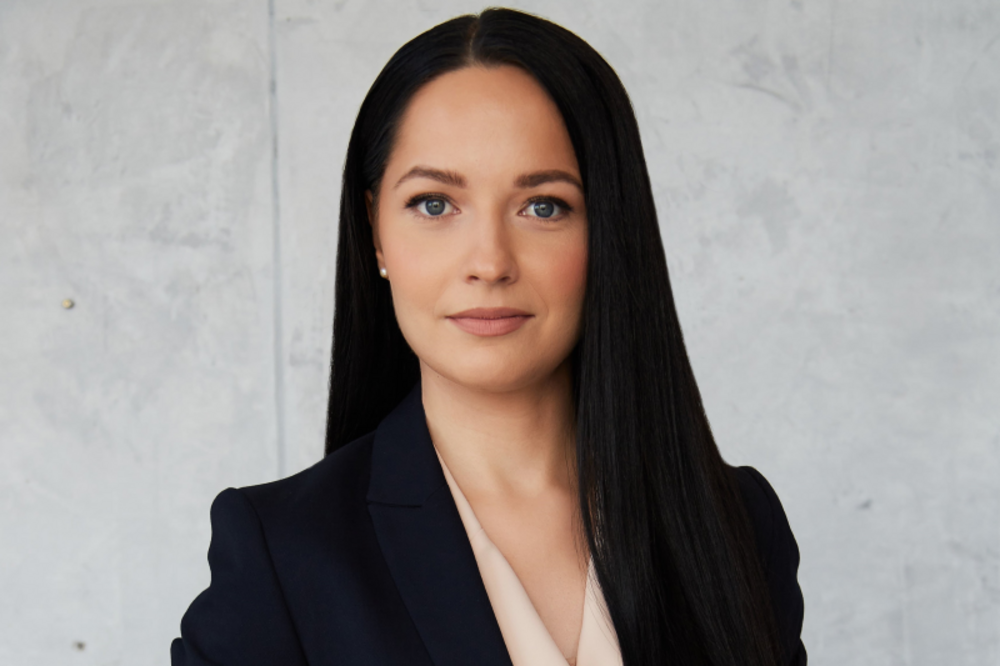
REWI Uni Graz: Your research at REWI Uni Graz focuses on the reduction of greenhouse gas (GHG) emissions from the waste management sector. What was it that draw your attention to this topic?
Greta Cesnaityte: I have been interested in the legal regulation of the waste management for a long time. I am currently writing my dissertation in this area. However, as I began to delve deeper into the legal regulation of waste management through a climate change perspective, I noticed that not everyone has the same understanding of the waste management sector’s actual greenhouse gas (GHG) emissions and, more generally, this sector’s impact on climate change. And that different understanding, among other things, comes from the legislation that defines the waste management sector. For example, the Waste Framework Directive defines “waste management sector” more broadly than the IPCC Guidelines for National Greenhouse Gas Inventories under which countries estimate that the waste sector generates the least GHG emissions. It can be assumed that this may influence the selected measures (legal or otherwise) and/or their scope, as well as public involvement, which plays a very important role when it comes to environmental decision-making.
The amount of waste seems ever increasing. Good news is that the recycling rate is too. However, there seems to be a lack of demand for the secondary raw materials obtained through the recycling process. How can this problem be tackled?
Yes, it is true, the amount of waste generated is increasing, we need to promote waste prevention, re-use, design and manufacture goods to be durable, easily repairable, etc. At the same time, we need a well-functioning market for secondary raw materials in which there is a demand for secondary raw materials obtained through the recycling process.
Challenges regarding the demand for secondary raw materials arise, among other things, from different countries’ waste collection and management systems not matching legislation regarding end-of-waste and by-product criteria. Nevertheless, the European Commission has already planned to “assess the scope to develop further EU-wide end-of-waste criteria for certain waste streams based on monitoring Member States’ application of the revised rules on end-of-waste status and by-products, and support cross-border initiatives for cooperation to harmonise national end-of-waste and by-product criteria”. Therefore, end-of-waste and by-product criteria could contribute to solving the challenges related to the demand for the secondary raw materials, as well as to the reduction of GHG emissions resulting from extraction and (or) production of primary raw materials. Implementation of the circular economy is very important. In addition, requirements to use a relevant percentage of recycled content in the production of new products (for example, packaging) can contribute significantly to the demand.
Could that also contribute to the reduction of GHG emissions from the waste management sector? What is the waste management sector’s share of total GHG emissions?
Yes, it can definitely help reduce GHG emissions in the waste management sector. It is said that “the circular economy has the power to shrink global GHG emissions by 39% and cut virgin resource use by 28%”.
Statistics show that in different countries the amount of GHG emissions from the waste sector varies from 1 to 5% per year. On the other hand, since the concept of the waste management sector as we understand it according to the Waste Framework Directive does not coincide with the scope of the waste sector according to the IPCC Guidelines, it can be said that the waste management sector actually accounts for more GHG emissions in percentage. For example, the recovery of waste in waste incineration plants is a common waste management activity in the waste management sector, but according to the IPCC guidelines, GHG emissions from waste incineration with energy recovery are not attributed to the "Waste" sector, but to the "Energy" sector.
Are there new insights you gained into your research topic during your stay at REWI Uni Graz?
Yes, of course, I received various insights and ideas, including on how to further deepen the research.
What are your impressions of our Faculty?
The Faculty Day event on 5 May left an impression on me. I am glad to have attended the panel discussion and have been able to discuss about climate litigation.
Also, I am very happy to be able to join ClimLaw: Graz, where very competent experts in their field work. So, the best words go to the Research Center for Climate Law and its team. I haven't met many other faculty members yet, but I hope that our paths will cross during the coming fall semester.
What’s next on your agenda?
I plan to continue to delve into the nuances and intricacies of climate change and the waste management sector, which is very important in order to achieve ambitious goals. I plan to carry out further comparative analyses (Austria, Lithuania and other EU member states).