Begin of page section:
Page sections:

  • Go to contents (Accesskey 1)
  • Go to position marker (Accesskey 2)
  • Go to main navigation (Accesskey 3)
  • Go to sub navigation (Accesskey 4)
  • Go to additional information (Accesskey 5)
  • Go to page settings (user/language) (Accesskey 8)
  • Go to search (Accesskey 9)

End of this page section. Go to overview of page sections

Begin of page section:
Page settings:

English en
Deutsch de
Search
Login

End of this page section. Go to overview of page sections

Begin of page section:
Search:

Search for details about Uni Graz
Close

End of this page section. Go to overview of page sections


Search

Begin of page section:
Main navigation:

Page navigation:

  • University

    University
    • About the University
    • Organisation
    • Faculties
    • Library
    • Working at University of Graz
    • Campus
    Developing solutions for the world of tomorrow - that is our mission. Our students and our researchers take on the great challenges of society and carry the knowledge out.
  • Research Profile

    Research Profile
    • Our Expertise
    • Research Questions
    • Research Portal
    • Promoting Research
    • Research Transfer
    • Ethics in Research
    Scientific excellence and the courage to break new ground. Research at the University of Graz creates the foundations for making the future worth living.
  • Studies

    Studies
    • Prospective Students
    • Students
  • Community

    Community
    • International
    • Location
    • Research and Business
    • Alumni
    The University of Graz is a hub for international research and brings together scientists and business experts. Moreover, it fosters the exchange and cooperation in study and teaching.
  • Spotlight
Topics
  • Our digital Advent calendar
  • Sustainable University
  • Researchers answer
  • Work for us
Close menu

End of this page section. Go to overview of page sections

Begin of page section:
You are here:

University of Graz Faculty of Law News Land Steiermark Fellow from Saint Petersburg
  • About the Faculty
  • Our Research
  • Student Services
  • Stay Connected

End of this page section. Go to overview of page sections

Friday, 29 October 2021

Land Steiermark Fellow from Saint Petersburg

 ©Rewi Graz, Claudia Namesnik

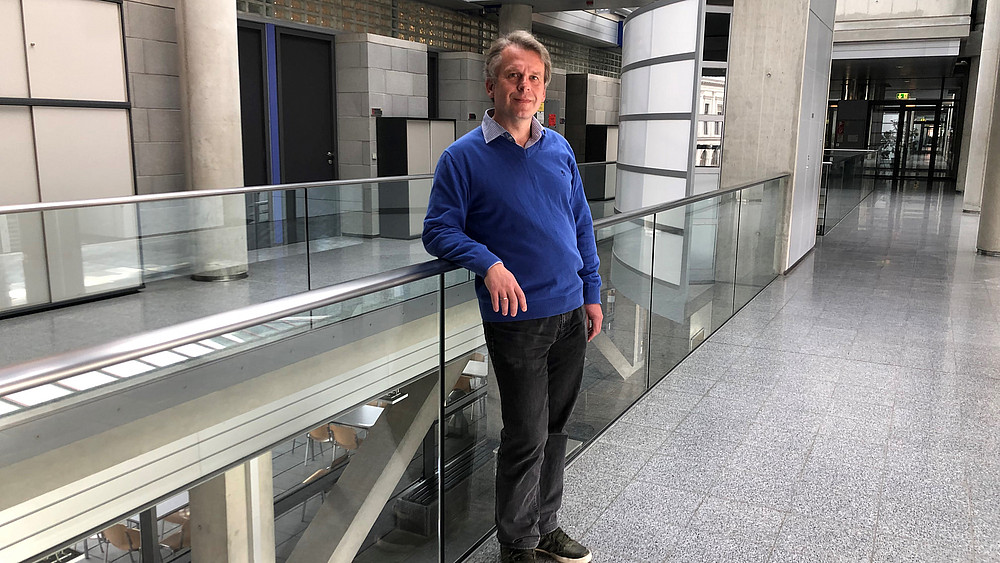
Our new Land Steiermark Senior Fellow Mikhail Antonov on current research projects, some memorable experience and his plans for his stay in Graz

REWI: Prof. Antonov, we’re happy to have you here at REWI Graz as our Land Steiermark Fellow! What opportunities does this fellowship give you?

The fellowship would enable me to facilitate outreach to and exchange with leading Austrian scholars at the University Graz and at other Austrian academic institutions. This can help maintain the existing and establish new contacts between Graz and the Russian research networks, in which I am involved. One of my key standing interests lies with comparative study of the legal thinking in Austria and Russia, its cultural background in the history of multinational empires (the Russian and the Austro-Hungarian) in the first two decades of the 20th century, and also in the development of the legal theory in the Soviet Russia and in the German-speaking community in the following years of the 20th century, including the experience of the totalitarian regimes. The University of Graz as one of the leading academic hubs in Austria will be an excellent place for extending this research. 


REWI: Your research currently focuses on Russian Exceptionalism in Human Rights. What are the most interesting findings of your research so far? What questions will you look into while in Graz?

I am convinced that actual political tensions between Russia and the EU, including those concerning human rights, are partly explicable as results of the difference in how we understand rights and other key legal concepts. For a number of reasons, connected with language, history, social and political structure, for Russians it is hard to accept that there can be rights beyond and even contrary to commands of the state. During my research in Graz I intend to continue with my research and look into how different legal methods (legal positivism, natural law, etc.) can be instrumentalized in ideologies, and how Begriffsgeschichte can explain this instrumentalization.


REWI: We’re really looking forward to your upcoming research results! Maybe we can follow up with some details on your time before you came to Graz, like previous positions, memorable experience in your career?

I studied law at the Saint Petersburg State University. After graduation in 2000, I started working at Staatsanwaltschaft (the Russian Prokuratura) and began writing my PhD. As my PhD topic was connected with a Russian sociolegal scholar (Georges Gurvitch) emigrated to France after 1917, I sought opportunity for continuing the research in France. In 2004, I went for master studies to the University Paris-V. In 2006, I finished my master studies in social sciences and returned to Russia, where defended my PhD in 2007 at the Saint Petersburg State University. Since then, I am teaching legal theory, legal methodology, history of political and legal ideas – first at my alma mater, and from 2010 on, at the Higher School of Economics.  

REWI: Last but not least, we are very interested in what else you are looking forward to in Graz (apart from your research)!

It is not my first time in Graz where I have already been for a couple of scientific conferences. When visiting Uni Graz before, I appreciated that this is an excellent research center consisting of the people specialized in legal and extra-legal (political, philosophical, historical, religious) issues tied to the field of human rights. In this regard, I will be able to draw on my previous research that involved case studies of Russian law in such areas as religious freedoms, enforcement of foreign decisions, and protection of human rights. Naturally, the city of Graz itself is worth of interest – there is plenty of beautiful places around the city for hiking and a lot of cultural attractions inside Graz.

created by Faculty of Law

Related news

Wann darf der Staat am Smartphone mitlesen?

Ukraine & Austria Cooperate in Human Rights

On 25 November 2025., the City of Graz welcomed a distinguished Ukrainian study group as part of a programme organised by the Raoul Wallenberg Institute of Human Rights and Humanitarian Law (RWI). The visit focused on exploring Graz’s pioneering role as a Human Rights City and its practical implementation of human rights at the local level.

The Winner's Circle

Wenn ein Studium so zu Ende geht, ist wohl ganz viel richtig gelaufen! Letzten Freitag zeichnete unsere Fakultät bei Best of REWI 2025 die besten Diplomstudierenden und die besten Dissertationen des vergangenen Studienjahres aus - samt Ehrenbuch, Urkunden, Tafelenthüllung und REWI-Award. Kurzum: Es gab viele Gründe zum Jubeln.

Musik trifft Recht

Am 26. November 2025 fand im Festsaal des Grazer Meerscheinschlössls eine Fortbildungsveranstaltung der Österreichischen Gesellschaft für Schule und Recht (ÖGSR) in Kooperation mit dem Zentrum für Kunst- und Kulturrecht der Universität Graz statt. Unter dem Titel „Musik und Recht“ standen das österreichische Musikschulwesen, seine rechtlichen Rahmenbedingungen und aktuelle Herausforderungen im Mittelpunkt.

Begin of page section:
Additional information:

University of Graz
Universitaetsplatz 3
8010 Graz
Austria
  • Contact
  • Web Editors
  • Moodle
  • UNIGRAZonline
  • Imprint
  • Data Protection Declaration
  • Accessibility Declaration
Weatherstation
Uni Graz

End of this page section. Go to overview of page sections

End of this page section. Go to overview of page sections

Begin of page section:

End of this page section. Go to overview of page sections